
Toronto services
Masonry & Brickwork Services in Toronto
Toronto masonry ranges from older soft brick and lime-rich mortar to newer veneers and concrete block assemblies. Matching the repair approach to the existing material matters: an unsuitable mortar or coating can trap moisture and accelerate deterioration.
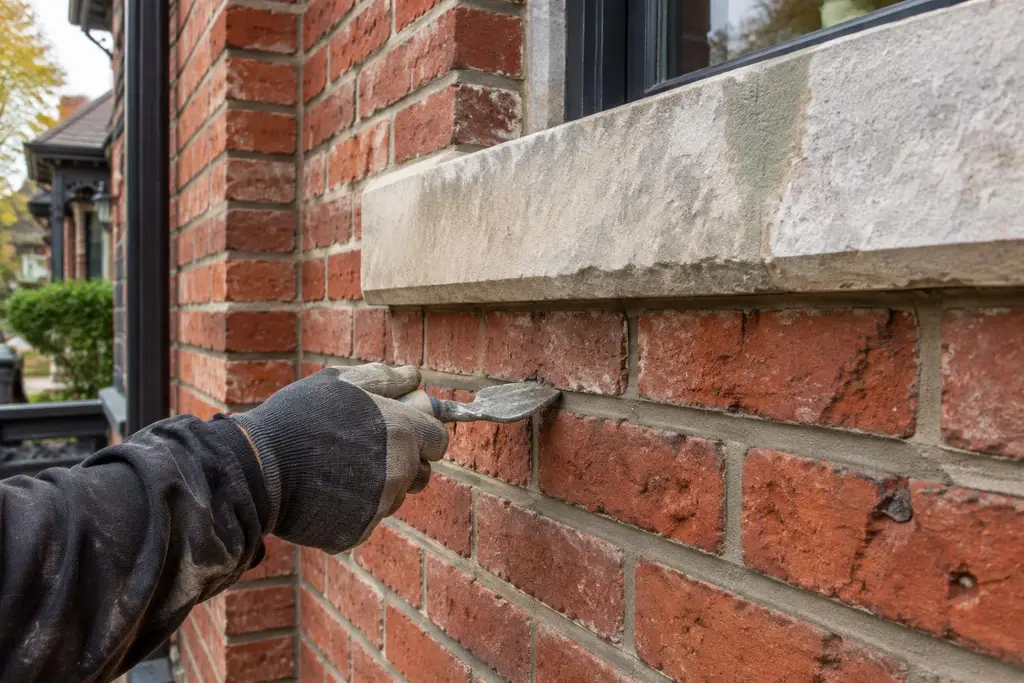
Statley Roofing & Masonry assesses cracking, weathering and water movement before proposing repairs. We discuss material compatibility, appearance and access in a written quote, with a written contract establishing the scope before work. Clean-up and a walkthrough follow the masonry work.
Brick Repairs & Replacement
Flaking faces, deep cracks and loose bricks can allow more moisture into a wall and leave adjacent units vulnerable. We assess the affected masonry and look for contributing conditions such as leaking sills, failed joints or poor roof drainage. Toronto freeze-thaw cycles can worsen saturated brick, especially near grade and exposed corners. Repairs may involve carefully removing individual units and installing compatible replacements with suitable mortar. We consider dimensions, texture and colour rather than relying on colour alone. If cracking suggests movement beyond the damaged brick, further assessment should precede a cosmetic patch.
Brick Veneer Installation
Brick veneer is an exterior cladding assembly that needs support, ties and a drainage space behind the brick. We assess the proposed wall, base support and transitions at windows, doors and rooflines before defining the installation. Toronto wind-driven rain makes flashing and weep openings important parts of the assembly. Work involves coordinating the veneer with the backing wall rather than treating it as a solid waterproof layer. Brick selection includes size, texture and colour, while mortar and joint profiles affect the finished appearance. Existing moisture or support issues need resolution before new masonry is installed.
Brick Wall Reconstruction
Bulging masonry, displaced courses and extensive deterioration may require dismantling and rebuilding part of a wall rather than localized repointing. We assess the wall's role, support conditions and surrounding connections before planning removal. Toronto buildings with closely spaced neighbours may also require careful access and protection arrangements. Reconstruction can involve salvaging suitable bricks, sourcing compatible replacements and restoring ties, flashing or drainage details as appropriate. Structural input may be needed to establish the rebuilding sequence and support. Some of this work may require a building permit from the City of Toronto; we'll confirm what's needed for your project.
Brick Repointing & Tuckpointing
Repointing replaces deteriorated mortar in existing joints, while decorative tuckpointing is a distinct finish that may be appropriate for particular masonry. We inspect joint depth, brick condition and the existing mortar before selecting a compatible approach. Older Toronto brick can be damaged by mortar that is excessively hard or poorly matched. Work involves controlled joint removal, cleaning and placing new mortar with a suitable profile and curing conditions. Recessed joints, loose sand and open gaps can indicate deterioration. We address contributing water sources where practical rather than treating renewed joints as a cure for every masonry problem.
Mortar Joint Repairs
Small areas of missing or cracked mortar can develop around sills, parapets and other exposed details without affecting an entire wall. We inspect the joint pattern and adjacent units to determine whether localized repair is appropriate. Toronto freeze-thaw exposure can enlarge open joints when water remains in them through winter. The work involves removing unsound material to a suitable depth and placing compatible mortar rather than smearing a thin layer over the face. We also consider whether recurring cracks reflect movement, since rigid patching alone may not address the cause or provide an appropriate long-term detail.
Expansion Joint Repairs
Movement joints allow parts of a masonry assembly to expand and contract without forcing that movement into surrounding brickwork. Split sealant, hard filler or gaps at joint edges can indicate that the detail is no longer functioning as intended. We assess joint width, backing and the condition of adjacent masonry before proposing repairs. Toronto seasonal temperature swings make movement accommodation important on long or exposed walls. Work may involve removing failed sealant, preparing bond surfaces and installing compatible backing and sealant. We avoid filling designed movement joints with mortar and distinguish them from cracks requiring structural investigation.
Brick Cleaning & Stain Removal
Brick staining can come from atmospheric deposits, rust, paint residue, organic growth or runoff from adjacent materials. We identify the likely source and assess the masonry before choosing a cleaning method. Older Toronto brick may be damaged by aggressive pressure washing or unsuitable acids. A limited test area helps establish how the surface responds before broader work proceeds. Cleaning may involve controlled washing and a material-specific treatment, with attention to nearby plants, metals and finishes. We explain that some staining can remain and that unresolved runoff or moisture conditions may cause discolouration to return.
Efflorescence Removal
White crystalline deposits on masonry often form when moisture carries soluble salts to the surface and then evaporates. We assess where the deposits appear and look for contributing water sources before discussing removal. Toronto spring thaws can make these marks more noticeable on walls that have remained damp through winter. Dry brushing or a suitable cleaning treatment may be appropriate depending on the masonry and deposit. The surface should be tested before stronger products are used. Removing salts improves appearance but does not resolve the moisture pathway, so recurring deposits may require drainage, flashing or joint repairs.
Stonework & Stone Repairs
Natural stone varies widely in strength, porosity and weathering behaviour, so repairs need to suit the specific material. We inspect loose units, open joints, surface scaling and support conditions before proposing replacement or localized restoration. Toronto freeze-thaw cycles can damage stone where water collects on ledges or enters open joints. Work may include resetting displaced pieces, renewing compatible mortar or sourcing replacement stone with suitable dimensions and texture. We also review drainage around caps and sills. Cracking related to movement requires further assessment rather than simply filling the visible line with a hard repair compound.
Stone Veneer Installation
Stone veneer needs a suitable substrate and a detailing approach matched to the chosen product. Adhered manufactured stone, thin natural stone and supported masonry veneer do not use identical assemblies. We assess wall condition, exposure and transitions before discussing materials and installation. Toronto rain and winter weather make drainage, flashing and clearances near grade especially important. Work includes preparing the backing and following the selected system's installation requirements. We consider joint style, colour variation and corners during planning. Existing moisture damage should be investigated first so a new decorative surface does not conceal a deteriorating wall behind it.
Lintel Replacement
A lintel supports masonry above a window or door opening. Rust staining, stepped cracking, sagging courses and displaced brick can indicate corrosion or another support problem. We assess the opening and determine what structural input and temporary support are needed before removal. Toronto moisture exposure can worsen corrosion where water remains against steel. Replacement work may include suitable protective treatment, appropriate bearing and renewed flashing or drainage details. Adjacent masonry is reinstated with compatible materials. The repair should address the support arrangement and water management together rather than replacing visible bricks while leaving a deteriorated lintel in place.
Window Sill Repairs & Replacement
Window sills should shed rain clear of the wall below. Cracks, open end joints and deteriorated drip edges can direct water into masonry or around the window opening. We assess stone, concrete or brick sill conditions and consider whether repair or replacement is appropriate. Toronto freeze-thaw cycles can enlarge cracks where water remains trapped. Work may include resetting or replacing the sill, renewing compatible joints and restoring a suitable outward slope. We also inspect the connection to the window frame. Covering a failed sill with sealant alone may leave the underlying drainage problem unresolved.
Chimney Repairs
Chimneys experience weather on several sides and often deteriorate faster above the roofline than sheltered walls below. We inspect accessible brickwork, mortar, caps and roof flashing for cracking, loose units and water entry. Toronto freeze-thaw cycles can accelerate damage where a cracked crown allows masonry to remain wet. Repairs may include selective brick replacement, repointing or cap-related work, depending on the findings. Roofing and masonry details need to connect appropriately at the base. Questions about flue condition, combustion safety or appliance connections require the appropriate specialist rather than being inferred from an exterior masonry inspection.
Chimney Rebuilding
Extensively loose, leaning or frost-damaged chimney masonry may need partial or more substantial rebuilding. We assess the visible structure, roof connection and intended continued use before establishing a scope. Toronto rooftop access and neighbouring properties influence protection and material handling during dismantling. Rebuilding can include compatible brick, mortar and a properly detailed crown, with flashing coordinated at the roof junction. Flue systems and connected appliances need separate consideration by the appropriate trade, particularly if the chimney remains in service. Some of this work may require a building permit from the City of Toronto; we'll confirm what's needed for your project.
Foundation Block Repairs
We cover this service in full on our foundation waterproofing & drainage page. Read about foundation block repairs.
Commercial Masonry
Commercial masonry work often involves larger wall areas, parapets and openings above public or occupied spaces. We assess loose units, joint deterioration, movement details and water-shedding components before planning repairs. Toronto exposure can vary sharply between sheltered walls and wind-driven rain at upper elevations. Work may include localized brick replacement, repointing or repairs around supported openings, with structural input where needed. Access equipment, pedestrian protection and coordination with building operations are part of planning. We identify the proposed work areas clearly so maintenance repairs are distinguished from larger restoration or structural concerns requiring a separate scope.
Masonry Restoration
Masonry restoration considers the wall's materials, construction and moisture behaviour rather than applying one treatment to every surface. We assess brick or stone, mortar joints, previous repairs and vulnerable details such as parapets and sills. Older Toronto properties may need a careful balance between retaining sound original material and replacing deteriorated areas. The scope can combine compatible repointing, selective unit replacement and restrained cleaning. Test areas may help establish appearance before larger work proceeds. We also discuss sources of ongoing wetting, since restoring the surface without addressing drainage or flashing defects can leave the same deterioration process active.
Related services

Masonry & Brickwork FAQ
Why does mortar compatibility matter?
Mortar needs to suit the strength and moisture behaviour of the existing masonry. An excessively hard replacement can concentrate damage in softer brick.
Can every cracked brick be replaced without further investigation?
No. A damaged unit may be a local issue, but repeated or stepped cracking can indicate movement or a support problem that needs assessment first.
Is white staining on brick always a serious defect?
White deposits are often efflorescence. Their significance depends on the moisture source, frequency and surrounding deterioration, so recurring deposits deserve investigation.
Will replacement bricks match exactly?
An exact match may not be available. We consider dimensions, texture, colour variation and mortar appearance when discussing compatible replacements.
Does chimney masonry work assess appliance safety?
Exterior masonry assessment does not establish flue or appliance safety. Those questions need the appropriate specialist, especially for a chimney that remains in use.
Can masonry be repaired during freezing weather?
Mortar placement and curing require suitable conditions. Scheduling and any protective measures depend on temperature, exposure and the materials being used.
Free estimates
Free estimate for masonry & brickwork
Tell us what's going on and add a few photos if you can. We'll arrange an inspection and give you a written quote.
Ready for a free written estimate?
Tell us about your roof, masonry or exterior project. We'll arrange an inspection and put our recommendations in writing.