
Big or small jobs — from minor repairs to full roof replacements, masonry rebuilds and commercial work. Call 1-888-457-7076.
Early brick houses around the downtown core
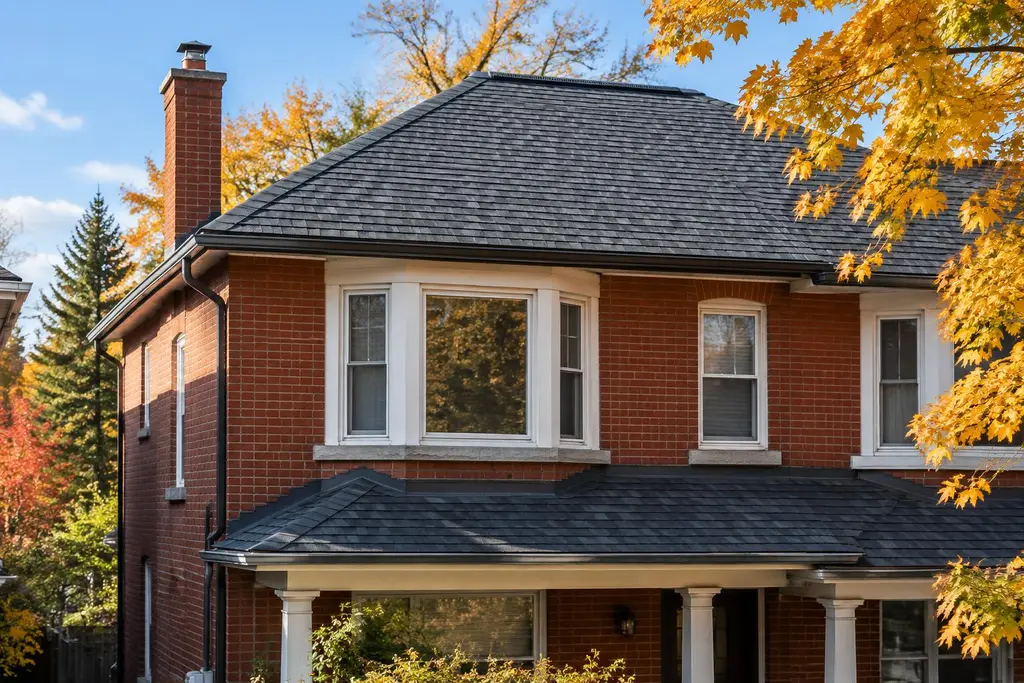
Streets near Simcoe Street and the older neighbourhoods around the downtown include early twentieth-century brick houses, many with steep front gables, enclosed porches and original chimneys. Decades of patching often leave a mix of mortars on the same wall. Before repointing, we look at which joints are original and which are later repairs, because a mortar harder than the brick can push damage into the masonry units themselves.
Chimneys on these houses may no longer serve a furnace, yet they still pass through the roof and collect weather. A redundant chimney can be repaired, rebuilt above the roofline or, where appropriate and permitted, taken down and the roof closed in. We discuss the options and what each involves rather than defaulting to the largest job.
Postwar bungalows and attic changes
Neighbourhoods such as McLaughlin and O'Neill include many bungalows and storey-and-a-half houses from the 1950s and 1960s. Their roofs look simple, but attics have often been reinsulated, rewired or partly finished over the years. Blocked soffit vents and unsealed ceiling openings can contribute to condensation and winter ice at the eaves, which new shingles alone will not correct.
Where a re-roof is due, we check decking, ventilation paths and flashing at chimneys and plumbing stacks as part of the scope. Rotted decking or a second layer of shingles changes the work, so we identify those conditions in writing and explain how any surprises found during tear-off will be handled.
North Oshawa subdivisions and exposed lots
Newer areas such as Windfields and the streets around the university campus feature larger homes with multiple gables, valleys and attached garages. Open land to the north means fewer windbreaks, so ridge caps, starter courses and exposed edges take more of the weather. Valleys collecting runoff from two large slopes deserve close attention when a leak first appears.
A newer house is not automatically trouble-free. Builder-installed eavestroughs can be undersized for long roof runs, and downspouts sometimes discharge right beside the foundation. We look at how water leaves the roof and where it ends up, then recommend changes to the drainage only where they will actually help.
Lake Ontario weather on the south side
Homes near the lakeshore and Lakeview Park sit in damper, windier conditions than those further north. Brick that stays wet for longer is more exposed to freeze-thaw damage, especially on sills, parapets and the top courses of chimneys. Spalled faces and open joints at these points are common starting places for masonry repairs.
Wind-driven rain off the lake can find its way behind poorly lapped flashing and into wall cavities. When a south-facing wall shows staining, we trace the possible routes from the roof edge down rather than assuming the brick itself is the source.
How a job in Oshawa is planned
We travel from Toronto and do not have an Oshawa office. The process starts with an inspection, followed by a free estimate in the form of a written quote and a written contract that sets out materials, work areas, exclusions and access. The City of Oshawa may require a building permit; we'll confirm what's needed.
Driveway space, overhead wires and neighbouring properties all affect how materials are delivered and debris is removed, so we plan those details up front. Statley is WSIB covered. Call 1-888-457-7076 to talk through the property and the problem you have noticed.