Big or small jobs — from minor repairs to full roof replacements, masonry rebuilds and commercial work. Call 1-888-457-7076.
Bay Ridges and the lakeshore
Bay Ridges and West Shore include many houses from the 1960s and 1970s, including back-splits, side-splits and bungalows near Frenchman's Bay. Split-level designs create multiple short roof sections and wall junctions, each relying on step flashing. When one of these joints fails, water can appear in a room some distance from the actual entry point.
Proximity to the lake brings wind and moisture. Brick sills, the tops of chimneys and exposed corners stay damp for longer, which increases freeze-thaw wear. We look at these areas alongside the roof itself when assessing staining or crumbling mortar.
Liverpool, Amberlea and established suburbs
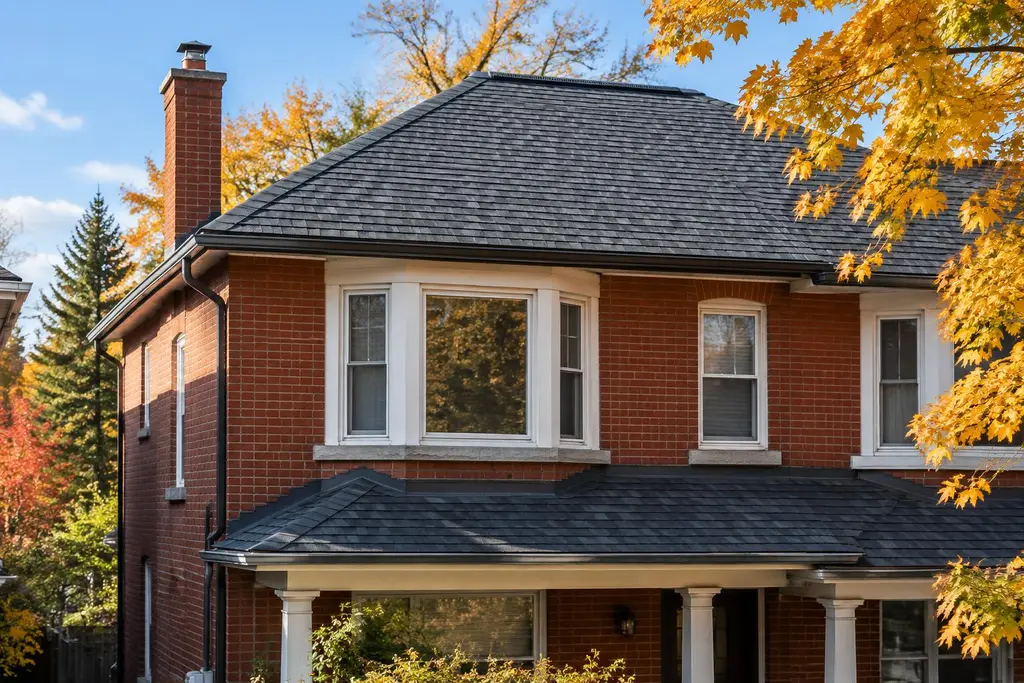
Central neighbourhoods such as Liverpool, Amberlea and Brock Ridge have two-storey homes from the 1980s and 1990s, many now reaching the age when original roofs are due for replacement. Attached garages, dormers and valleys are typical. A replacement should include the underlayment at eaves and valleys and new flashing where existing pieces are deteriorated.
Many of these homes have been extended with sunrooms or rear decks. A low-slope roof over a sunroom, tied into the main house, needs its own drainage and flashing details and is a frequent source of leaks.
Seaton and Duffin Heights
The newer communities in Seaton and Duffin Heights feature townhouses and detached homes with modern, often busy rooflines. While materials are new, early issues can include missing or loose ridge caps, poorly sealed roof vents and eavestroughs that discharge too close to new foundations on settling soil.
Settling backfill around a new home can create a negative slope toward the walls. We look at grading and downspout discharge along with the roof, because surface water is a frequent cause of basement dampness on newer properties.
Rural hamlets in north Pickering
Claremont, Greenwood and the farmland north of Highway 407 include older farmhouses, outbuildings and newer country homes. These buildings are exposed to open wind, and older structures may have metal roofing, stone or brick foundations and chimneys built for wood heat.
Longer driveways, wells and septic beds affect where trucks and bins can safely go, so we plan access at the inspection. Metal roofing can suit exposed rural buildings, and we discuss its snow-shedding behaviour near doors and walkways.
Getting started in Pickering
We come to Pickering from Toronto and have no Pickering office. The process is an inspection, a free estimate as a written quote, and a written contract setting out materials, work areas, exclusions and access. The City of Pickering may require a building permit; we'll confirm what's needed.
After the work, we clean up and walk through the finished areas with you. Statley is WSIB covered. Call 1-888-457-7076 to talk through your property and arrange a visit.