
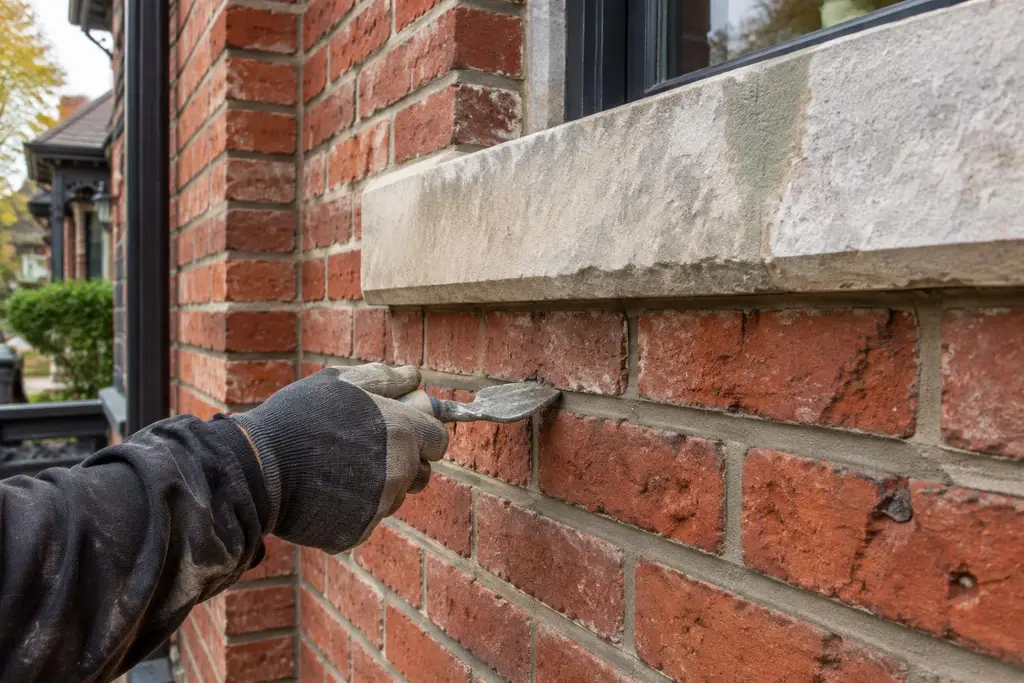
What repointing does
Repointing means removing deteriorated mortar from existing joints to an appropriate depth and placing new mortar in those joints. It is different from simply smearing a thin layer over the face of an existing joint. A surface patch may not bond properly or address the deteriorated material underneath. The required removal depth and repair method depend on the joint condition, brick type and the existing mortar.
Tuckpointing is a term used in different ways. It can refer to repointing with a contrasting line, or more broadly to repair work on mortar joints. When discussing a project, we describe the actual joint preparation, mortar placement and finish rather than relying on the label alone. That makes it easier to understand what the quote includes and how the finished work is intended to look.
Older Toronto brick needs compatible mortar
Older Toronto homes may have soft brick that was made and laid with mortar suited to its age and construction. A repair mortar that is too hard or too strong can place more stress on the brick as the wall responds to moisture and temperature changes. The result can be damage to the brick faces rather than gradual wear of the mortar joint, which is generally the more repairable component.
Lime-based mortar and Portland cement-based mortar have different properties, and mixes vary. The right choice is not determined by a simple rule that one ingredient is always correct. We consider the existing masonry, mortar condition, exposure and the intended repair. A suitable mortar should be compatible with the brick and the wall, while also meeting the practical requirements of the repair. If the existing materials are uncertain, that should be acknowledged when defining the scope.
Joint preparation and profiles
A successful repointing job depends on preparation as well as the new mortar. Loose or failing mortar must be removed without unnecessarily chipping the brick edges. Dust and debris need to be cleared from the joints, and the replacement mortar needs to be placed and finished appropriately. Work methods should suit the masonry and the access conditions, especially on older façades where brick edges may already be weathered.
The finished joint profile affects appearance and how water runs off the wall. Common profiles include flush, recessed and tooled concave finishes, but an existing building may have a distinctive joint or detailing worth matching. The profile should be discussed before work begins; a deep recess, for example, can expose more brick edges to weather. Colour and texture also vary with materials, curing and existing age, so an exact visual match cannot always be assumed.
- Identify areas where mortar is loose, cracked or substantially eroded
- Discuss the proposed mortar and joint profile before installation
- Protect adjacent brick and nearby surfaces during preparation
- Allow for suitable weather and curing conditions
Freeze-thaw exposure and water management
Toronto’s freeze-thaw cycles make water management important. Water that enters porous masonry can freeze as temperatures fall, placing stress on brick and mortar. Repeated cycles can worsen cracks, flaking and open joints. Repointing can help restore deteriorated joints, but it is not a substitute for addressing a separate source of water, such as a leaking eavestrough, failed flashing, poor drainage or a damaged sill.
Before settling on the repair area, consider whether deterioration is concentrated below a roof edge, around a downspout or beside a chimney. Such patterns can point to a water exposure that needs separate attention. We explain what is visible and which related conditions may need investigation; concealed causes cannot always be confirmed from the wall surface alone.
How much of the wall should be repointed?
The repair may be limited to a few areas or extend across a larger section of masonry. The decision depends on how consistently the mortar has deteriorated and whether the wall has local damage or widespread joint failure. Repointing sound joints without a clear reason adds work without necessarily improving the wall. On the other hand, a narrow patch may leave nearby failing mortar in place and create a mismatched appearance.
An inspection should distinguish deteriorated mortar from normal surface variation and identify brick that is cracked or spalling. Brick replacement may be appropriate where units are badly damaged, but it is a separate task from repointing. The written quote should define the areas, preparation and finish included, and note any assumptions about concealed or inaccessible conditions.
The work process and property care
We begin by reviewing the masonry and discussing your concerns. After the inspection, you receive a written quote that describes the proposed repair area, mortar approach, joint profile and relevant exclusions or limitations. Before work starts, the agreed scope and other terms are set out in a written contract. Access, nearby planting, windows and neighbouring property are considered when planning the work.
The work proceeds with preparation, mortar placement and finishing in the agreed areas. Weather can affect installation and curing, so scheduling may change when conditions are unsuitable. After the work, the area is cleaned up and we walk through the completed scope with you. That review is an opportunity to ask questions and identify any items that were not included in the agreed repair.
When to arrange an assessment
Consider an assessment if mortar is falling out, joints have deep gaps, brick faces are flaking or moisture appears on an interior wall near the masonry. Do not assume every crack means the same repair is needed. A change in a crack, movement or a wall that appears displaced can warrant a broader building assessment beyond repointing.
Photos can help document where deterioration appears and whether it changes after rain, but they do not show the full condition of the joints. An on-site review provides a better basis for defining a repair and explaining whether repointing alone appears appropriate.