Big or small jobs — from minor repairs to full roof replacements, masonry rebuilds and commercial work. Call 1-888-457-7076.
Five communities, several kinds of housing
Pickering and Ajax contain established suburban homes as well as newer development, with roof valleys, attached garages and mixed exterior materials common in parts of both communities. Whitby combines older central streets with extensive later neighbourhoods. Oshawa also includes older brick houses, postwar bungalows and newer subdivisions. Each form creates different questions about water entry, attic conditions and access.
Clarington includes Bowmanville, Courtice, Newcastle and rural areas, so a service request may involve a village house, a suburban roof or a more exposed property. We confirm the address and proposed work when discussing a visit. Housing patterns are useful context, but previous repairs, additions and present material condition should guide recommendations more directly than the municipality's name.
Lake-influenced weather without a single snow assumption
Lake Ontario influences weather along Durham's southern edge, while distance inland, elevation and surrounding shelter change local exposure. Wind-driven rain can test flashings and wall connections on open sites. Lake-effect snow can occur when conditions align, but it is not a uniform condition across Pickering, Ajax, Whitby, Oshawa and Clarington. We do not assign a snowbelt diagnosis to every property.
Winter freezing and thawing can affect wet masonry throughout the region. Roof shape and wind influence where snow gathers, while attic heat loss may contribute to ice at an eave. A winter leak therefore needs investigation of timing and likely water routes. Roof covering, ventilation and drainage can be related without every problem requiring the same combination of repairs.
Older town-centre brick and newer roof junctions
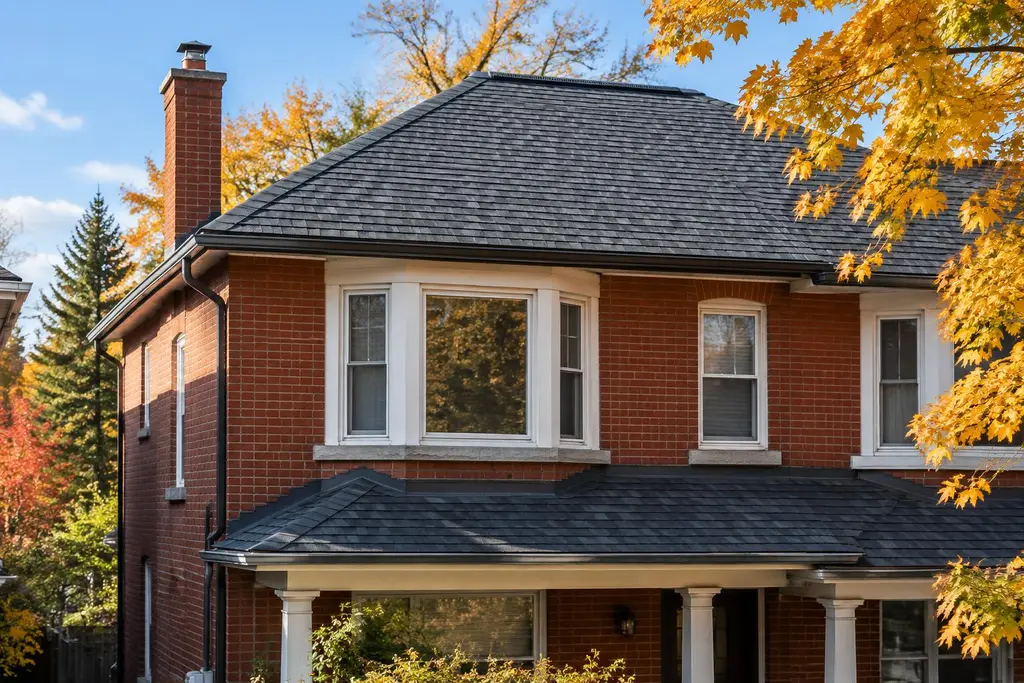
In parts of central Whitby and Oshawa, older homes may have chimneys, porch roofs and brickwork altered over time. Repointing should use compatible mortar, and loose or deteriorated units need their own assessment. Chimney flashing is another potential entry point. We consider the masonry and roof connection together rather than assume a stain beside a chimney has only one possible cause.
On newer subdivision homes, roof-to-wall junctions, valleys and penetrations are useful inspection points. Shingle repairs or replacement may be appropriate, but a localized defect should not automatically become a whole-roof recommendation. Eavestrough and fascia conditions also matter where runoff leaves the roof. The proposed scope should identify which details need work and explain what remains outside the assessment.
Open lots, long drainage routes and practical access
A property beside open land may have different wind exposure from a house sheltered by mature streets and neighbouring buildings. Rural or larger lots may also have longer access routes and different staging constraints. We discuss driveway access, occupied areas and material handling for the actual site. More space does not automatically mean simpler drainage or unrestricted access to every roof section.
Downspout discharge and visible grading deserve attention when water collects beside foundations or entrance steps. Runoff needs a suitable destination rather than a route that shifts the issue toward another property. Foundation waterproofing, concrete steps or retaining wall work may be relevant after assessment. Structural concerns or uncertain subsurface conditions can require further investigation before a repair method is chosen.
Confirming the address and documenting the work
Call 1-888-457-7076 with the municipality, property location and symptoms so we can discuss service from Toronto. An inspection is followed by a free written estimate and then an agreed written contract. The applicable municipality may require a building permit; we'll confirm what's needed. Requirements depend on the work and address, not simply the Durham Region label.
The contract should record materials, included areas, exclusions and access arrangements before work starts. We complete the agreed scope, clean up and finish with a walkthrough. If concealed deterioration requires a change, that additional work should be documented and approved first. Our coverage includes Pickering, Ajax, Whitby, Oshawa and Clarington; it does not imply an office in any of those communities.