
Protecting people before inspecting damage
Stay clear of fallen materials, loose roof edges, damaged chimneys and areas beneath a sagging ceiling. Water near wiring or electrical fixtures needs appropriate professional attention. If there is an immediate danger to people, contact emergency services. Do not climb onto the roof, attempt to secure loose material from a ladder or enter a visibly damaged attic to photograph the problem.
When conditions allow, move belongings away from affected areas without entering a hazardous space. Keep children, visitors and pets clear of falling debris and wet surfaces. A container may help collect a small drip only where the ceiling and surroundings are safe. Do not puncture a bulging ceiling or disturb unstable finishes. Reducing exposure matters more than saving a photograph or reaching the apparent leak location.
Sharing useful information when you contact us
Describe what happened, when it happened and whether water is still entering. The property type, approximate roof form and affected rooms help frame the enquiry. Mention fallen branches, displaced masonry, visible openings or damage near overhead wires. Photographs taken from the ground or a safe indoor position can help explain the situation without exposing anyone to additional risk.
Access details are also useful on Toronto's narrow lots. Shared driveways, rear laneways, locked gates and occupied commercial entrances can affect what equipment and staging are practical. We discuss availability and the limits of what can be assessed from the information provided. An initial conversation is not a confirmation that roof access is safe or that a particular temporary measure will be suitable.
Assessing storm damage when conditions allow
Wind can lift roofing, displace flashings and expose underlying layers. Falling branches may damage both the covering and the deck, while heavy rain can reveal drainage blockages or existing weaknesses. The visible opening may be only part of the damage. Before anyone works above ground, access, surface conditions and the stability of the affected area need consideration.
Inspection may begin from the ground or from safe interior locations rather than immediately on the roof. High winds, lightning, ice or unstable construction can prevent exterior work. A delayed roof inspection may be the responsible choice when conditions are unsafe. The assessment should distinguish observed damage from areas that remain concealed, including whether further structural review is needed before a repair area can be opened.
Using tarping and temporary protection appropriately
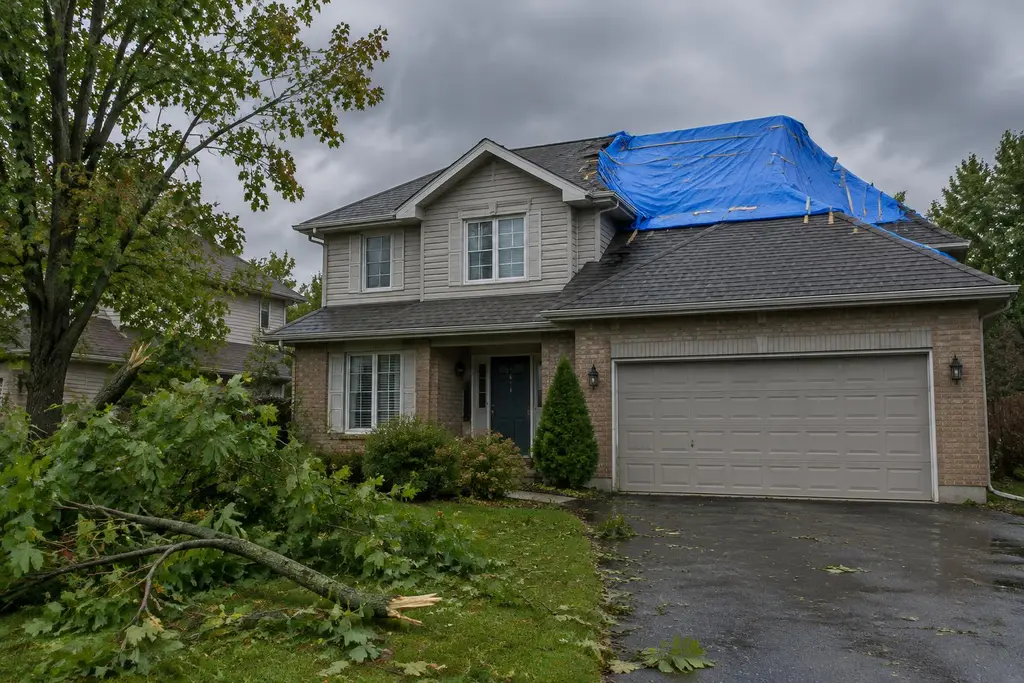
A tarp can provide temporary protection over some damaged sloped roofs, but it needs a suitable arrangement and secure attachment. Its placement should account for runoff, roof shape, wind exposure and the condition of the underlying structure. Throwing a loose sheet over an opening can create additional hazards or direct water into another vulnerable location.
Other situations may call for a compatible temporary membrane patch, limited removal of loose material or protection at a specific flashing detail. Not every surface can accept a temporary attachment safely. These measures have limits and require follow-up; they are not equivalent to a completed roof repair. Their condition can change with wind, rain or snow, so the temporary scope should include clear discussion of its purpose and next steps.
- Choose protection suited to the damaged roof and access conditions.
- Keep runoff away from openings and vulnerable edges.
- Plan follow-up rather than treating temporary cover as a finished roof.
Accounting for flat roofs and adjoining properties
Low-slope roofs may need a different response from pitched roofs. Ponding around a blocked outlet, a damaged membrane seam or an exposed curb cannot always be addressed with a draped tarp. Standing water can also hide hazards. Drainage routes and the condition of the deck need review before selecting a temporary measure or attempting to reach the affected area.
On semis, row houses and close-set commercial buildings, protection must not redirect water onto a neighbour's property. Shared walls, parapets and continuous-looking roof surfaces require attention to boundaries and permissions. Material staging should keep entrances and public routes safe. If damage includes masonry, rooftop equipment or service connections, additional assessment or trade coordination may be needed before the exterior can be restored.
Moving from urgent protection to permanent work
Once the immediate situation is understood, a permanent repair scope can address the damaged assembly rather than only the opening. That may involve decking, underlayment, insulation, membrane, shingles or flashings. Wet materials and concealed damage need consideration before new roofing is installed. A small visible defect does not establish that the underlying layers remain suitable.
Our process is inspection, written quote, written contract, work, clean-up and walkthrough. Temporary protection and permanent work should be identified separately in the written documents. Some of this work may require a building permit from the City of Toronto; we'll confirm what's needed for your project. That review is particularly important if damage leads to structural repairs or changes beyond replacing the roof covering.
Recording the damage and monitoring safely
Keep a simple record of the event, visible damage, temporary measures and subsequent changes. Ground-level photographs and notes about water entry can support discussions with your property insurer if you choose to make a claim. Coverage and claim decisions are determined by your policy and insurer, not by the roofing contractor. Preserve relevant project documents without putting yourself at risk to gather evidence.
After temporary protection is installed, watch from safe locations for new interior moisture, displaced material or changing hazards. Contact the contractor if conditions change rather than trying to adjust a tarp yourself. Interior drying and damaged finishes may need separate attention. The final walkthrough should review the permanent scope and distinguish completed work from any remaining building repairs or maintenance needs.