
What to record when a leak appears
Useful information begins with timing. Note whether the moisture appears during wind-driven rain, after a prolonged storm, while snow melts or during cold weather without precipitation. Photograph stains from a safe position and record whether they grow or recur. A room name, approximate location and description of the weather can help connect an indoor symptom with possible exterior entry points.
Move belongings away from affected areas when you can do so safely. Keep clear of sagging ceilings, wet electrical fixtures and visibly unstable finishes. Do not enter an attic with unsafe access or climb onto a wet roof. If water is near electrical equipment, seek appropriate assistance rather than touching the affected area. These precautions take priority over trying to locate the exact opening yourself.
Tracing the route rather than guessing
A leak assessment connects interior evidence with roof conditions. Accessible attic observations may reveal staining, damp insulation or tracks along framing. Exterior inspection considers the relevant slopes, seams, edges and penetrations, but roof access depends on weather and safety. Some entry points are concealed, intermittent or only active under particular wind conditions, which can limit conclusions from a single visit.
Water testing or selective opening may be useful in some situations, but each needs a controlled plan and suitable conditions. An investigation should avoid introducing unnecessary water or damaging sound materials without a clear reason. We explain what the findings support, what remains uncertain and whether additional investigation is needed. A plausible defect and a confirmed water pathway are not always the same thing.
Common trouble spots on Toronto roofs
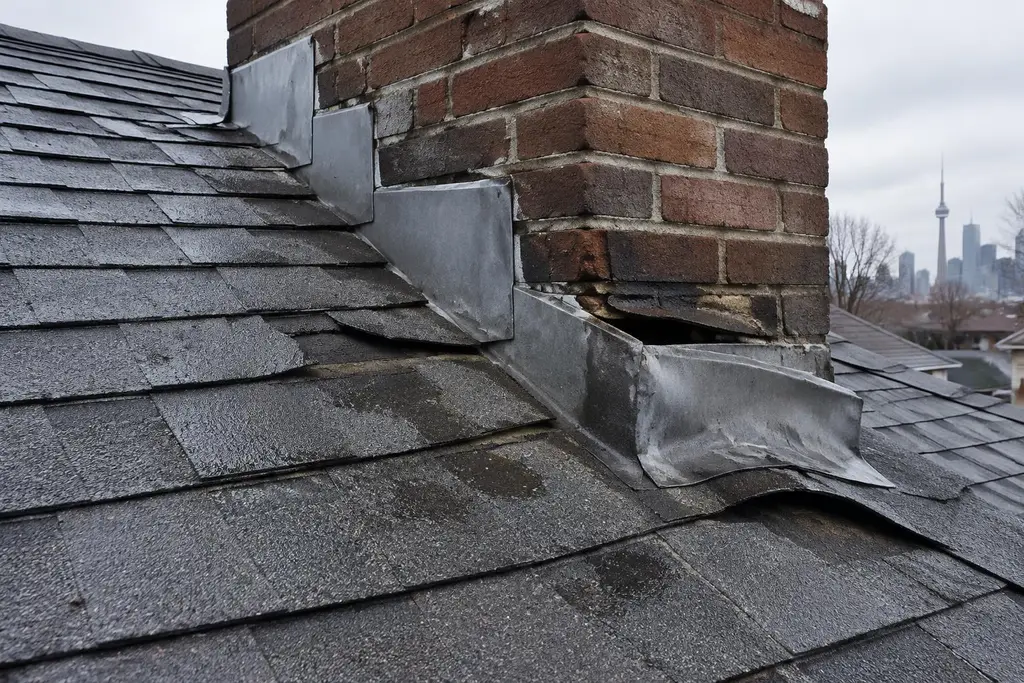
Roof-to-wall intersections, chimneys, skylights and plumbing vents are frequent places to investigate because they interrupt the water-shedding surface. Worn or poorly integrated flashing can allow entry even when nearby shingles appear intact. Valleys concentrate runoff, while displaced ridge pieces or damaged roof edges may expose vulnerable layers. Masonry defects can also admit water beside an otherwise serviceable roof.
Low-slope roofs bring a different set of details, including membrane seams, drains, parapets and equipment curbs. A blocked outlet can raise water around details that were not intended to remain submerged. On semis and row houses, water may cross concealed boundaries between additions or adjoining assemblies. The assessment should follow those connections rather than limiting attention to the most visible patch or the newest stain.
- Review penetrations and roof-to-wall connections.
- Check drainage routes and nearby low areas.
- Consider adjoining masonry and concealed transitions.
Separating roof leaks from other moisture
Not every upper-floor stain begins with rain entering through the roof. Condensation, plumbing leaks and poorly connected exhaust ducts can produce similar symptoms. During Toronto winters, warm indoor air reaching cold attic surfaces can create frost that later melts. That moisture may be mistaken for a new roof opening, particularly when it appears during a thaw.
The inspection considers timing, moisture patterns and accessible building details before selecting a repair. A roofing patch will not correct a leaking supply line or a disconnected bathroom exhaust. Likewise, adding ventilation without considering indoor air leakage may leave a condensation problem unresolved. Where another trade or a more detailed building assessment is needed, that distinction should be made before work is presented as a roof repair.
Choosing a repair proportionate to the damage
A targeted repair may involve replacing damaged roofing, rebuilding a flashing detail or correcting a drain connection. The surrounding materials must be suitable for integration; brittle shingles or deteriorated membrane can make a small patch less practical than it first appears. The quote should identify the repair area, proposed materials and limits, including any adjacent work necessary to reach a sound connection.
Repeated leakage in several areas may justify discussing a broader replacement, but that recommendation should follow the evidence. Concealed wet insulation or damaged decking may change the work after opening. Temporary protection and permanent repairs should be described separately. If structural changes or other regulated alterations become part of the project, permit requirements need review rather than being overlooked because the initial request concerned a leak.
Setting expectations in writing
Our process is inspection, written quote, written contract, work, clean-up and walkthrough. For a leak investigation, the written scope should explain whether the proposed work is exploratory, temporary or a permanent repair to an identified detail. It should also describe access arrangements, removal limits, disposal and how additional findings will be handled. Clear distinctions matter when the source cannot be fully confirmed beforehand.
Toronto properties often have tight access, shared driveways and occupied rooms directly beneath the work. Discussing those constraints helps plan protection and staging. Roof access and material application depend on suitable conditions, so work sequencing may change with weather. If the repair reveals damage beyond the agreed scope, the findings and proposed next step should be communicated before additional work proceeds.
Checking the repair and watching for changes
The walkthrough reviews the completed work and any findings uncovered during the repair. Interior finishes may remain damp or stained after an entry point is addressed, so appearance alone is not an immediate measure of the result. Wet materials may need separate assessment, drying or replacement. Closing a ceiling before the moisture condition is understood can conceal an ongoing issue.
Keep a record of later weather events and any fresh moisture. A new symptom may involve the repaired detail, another entry point or a separate indoor source. Photographs and timing help make that distinction. Regular drainage maintenance and observation of flashings can reduce overlooked deterioration, but no maintenance visit replaces prompt investigation when water reappears. Avoid climbing onto the roof to check the work yourself.