
Toronto services
Inspections, Maintenance & Restoration in Toronto
An exterior assessment should help you understand what is visible, what it may mean and what needs further investigation. Statley Roofing & Masonry brings 25+ years of experience to Toronto roofing and masonry work, offering condition-based discussions for roofs, masonry, chimneys and connected exterior details. An assessment is not a substitute for a structural review or an examination of every concealed layer.
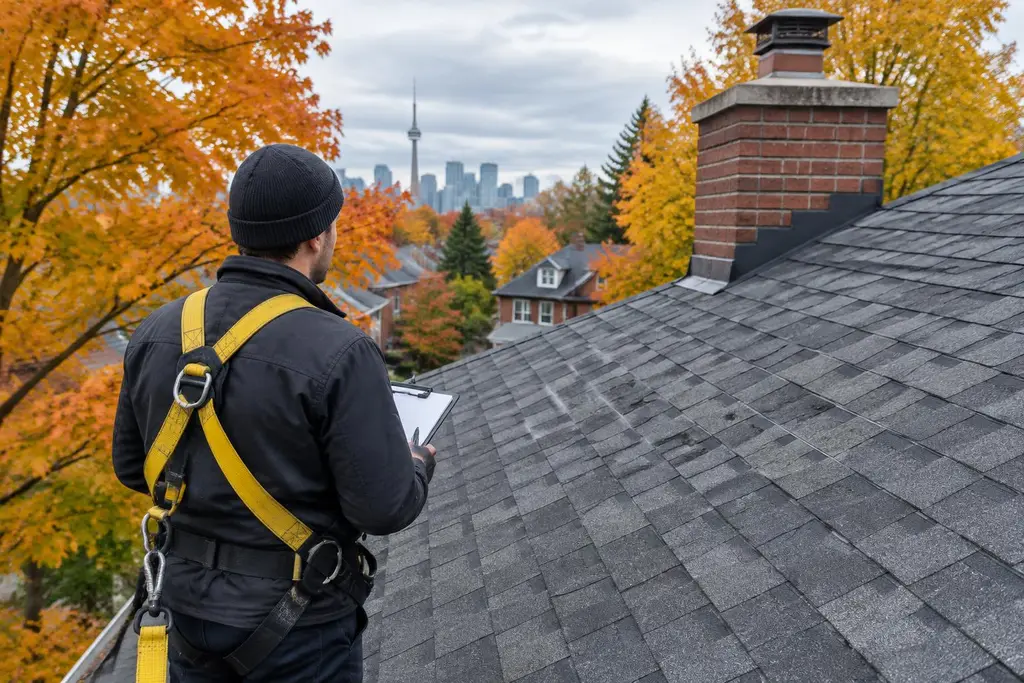
Our process moves from inspection to written quote, written contract, work, clean-up and walkthrough. Whether you are investigating a stain or planning maintenance, the proposed scope should distinguish observations from assumptions and explain the limits of access before repair decisions are made.
Roof Condition Assessments
A roof condition assessment considers the visible covering, flashings, edges, penetrations and drainage arrangement. Interior symptoms and accessible attic observations can add useful context. The roof's age and repair history help frame the review, but they do not establish its condition without examination.
We discuss whether the findings suggest targeted repairs, maintenance or a broader replacement investigation. Safe access and weather can limit what is visible, while concealed moisture may require further testing or selective opening. The purpose is to support an informed next step, not to assign a precise remaining service period from a brief visual inspection.
Roof Maintenance Inspections
Roof maintenance inspections focus on changes that can develop between larger projects. Debris at outlets, displaced flashings, damaged coverings and disturbance around rooftop equipment are examples of conditions worth reviewing. The appropriate inspection route depends on roof type, access and the safety of the surface.
A useful visit distinguishes observations from repair tasks. Cleaning or minor work should be defined in the agreed scope, while additional repairs can be proposed separately. Keeping photographs and location notes helps compare future conditions. An inspection cannot reveal every concealed defect, so recurring leaks or unexplained dampness may need a more focused investigation.
Masonry Condition Assessments
A masonry condition assessment reviews visible brick, stone, mortar joints and related details for deterioration and movement. Cracking, open joints, spalling and staining can have different causes. Water entry from roof edges or openings may affect masonry well away from the original source, so surrounding details deserve attention.
The review should identify where localized repair appears reasonable and where further assessment is needed. Bulging walls, displaced masonry or suspected structural movement should not be treated as routine repointing. Material compatibility also matters, especially on older Toronto buildings. Any proposed repair scope should explain its limits and avoid concealing unresolved moisture or movement concerns.
Chimney Inspections
An exterior chimney inspection considers accessible masonry, mortar joints, the crown and the connection between chimney and roof. Loose units, open joints and deteriorated flashing can create water-entry concerns or falling-material hazards. Observations from the ground may be limited, and safe closer access depends on conditions.
This exterior review does not establish the safety of an internal flue, fireplace or heating appliance. Those components may require separate specialist assessment. If repairs are proposed, the scope should distinguish masonry work from flashing and appliance-related work. Suspected instability or significant displacement requires further evaluation before a routine repair approach is selected.
Water Infiltration Assessments
Water infiltration assessments follow the relationship between symptoms, weather and building details. A stain may originate at a roof transition, wall opening, foundation detail or another source. Condensation and plumbing can also resemble exterior leakage, so the investigation should not begin with a predetermined repair.
Useful information includes when moisture appears, how it changes and which spaces are affected. Accessible observations may support a likely pathway, while selective opening or controlled testing may be needed in other cases. We explain uncertainty and investigation limits. The resulting proposal should distinguish further assessment from repair rather than presenting an unconfirmed source as established fact.
Exterior Building Inspections
Exterior building inspections review accessible roof, wall, trim, opening and drainage details within an agreed scope. The aim is to identify visible concerns and relationships that may affect maintenance decisions. A loose component above an entrance has a different priority from weathered paint, and a recurring wet area may need investigation before surface repairs.
The review should state access limits and identify areas not examined. It is not a complete building survey or a substitute for specialist structural advice. Photographs and location descriptions can help organize next steps, including immediate precautions, targeted repairs and items suitable for planned maintenance.
Preventative Property Maintenance
Preventative property maintenance uses observed conditions to plan manageable tasks before deterioration becomes more extensive. Clearing drainage routes, reviewing flashings and addressing small exterior defects can support the building's water-management system. The right priorities depend on the property rather than a universal checklist.
We discuss known issues, seasonal exposure and access before defining the work. A written scope should identify included tasks, exclusions and any repairs requiring further approval. Maintenance cannot prevent every failure or reveal all concealed damage. Its practical value is a clearer record of conditions and a planned approach to issues that might otherwise remain unnoticed.
Emergency Exterior Repairs
Emergency exterior enquiries may involve storm damage, loose materials or sudden water entry. Keep clear of unstable masonry, sagging ceilings and damaged electrical areas. If people face immediate danger, contact emergency services. Photographs should only be taken from safe locations, without climbing onto the building or entering a hazardous space.
Availability and safe working conditions determine what can be arranged; response times are not promised. Temporary protection may be appropriate, but it must be distinguished from permanent restoration. The assessment should identify visible damage, access limitations and any need for further structural or trade input before a defined repair scope is agreed.
Roof Maintenance Programs
A roof maintenance program sets out an agreed pattern of review rather than relying only on leak calls. The plan can identify inspection areas, drainage checks and record-keeping suited to the roof and its access conditions. Frequency should reflect exposure, roof use, nearby vegetation and known concerns.
The written arrangement should explain which tasks are included and how additional repairs are proposed for approval. Photographs and notes can help track recurring issues and changes around rooftop equipment. A program does not establish the condition of every hidden layer or prevent all leaks; unexplained moisture still needs prompt, focused investigation.
Building Restoration Services
Building restoration may combine roofing, masonry and exterior repairs where several details have deteriorated together. Planning should begin with causes and connections, including water movement and any signs of structural change. Cosmetic improvements alone may conceal damage without addressing why it developed.
A phased scope can separate investigation, necessary repairs and finish restoration while identifying dependencies between trades. Material compatibility and the appearance of retained surfaces need discussion. Some of this work may require a building permit from the City of Toronto; we'll confirm what's needed for your project. Written changes are important when opening the building reveals conditions beyond the initial assessment.
Related services
Inspections, Maintenance & Restoration FAQ
Is an inspection the same as a structural assessment?
No. An exterior condition review has a defined visual scope. Suspected structural issues require appropriate further assessment.
Can you identify every concealed problem?
No. Access, finishes and existing layers limit visibility. Further testing or selective opening may be proposed when the evidence supports it.
Should I gather information before the visit?
Repair records, safe photographs and notes about when symptoms occur can help. Do not enter unsafe areas or climb onto the roof to collect them.
Are repairs automatically included?
Only work identified in the agreed scope is included. An assessment, maintenance task and repair may be quoted separately.
How often should a roof be reviewed?
The appropriate interval depends on roof condition, exposure, access and use. Storm damage or new moisture can justify an additional review.
Can assessments help plan phased work?
Yes. Findings can help distinguish immediate concerns, further investigation and planned maintenance, while acknowledging that concealed conditions may change priorities.
Free estimates
Free estimate for inspections, maintenance & restoration
Tell us what's going on and add a few photos if you can. We'll arrange an inspection and give you a written quote.
Ready for a free written estimate?
Tell us about your roof, masonry or exterior project. We'll arrange an inspection and put our recommendations in writing.