Why ice dams develop on Toronto homes
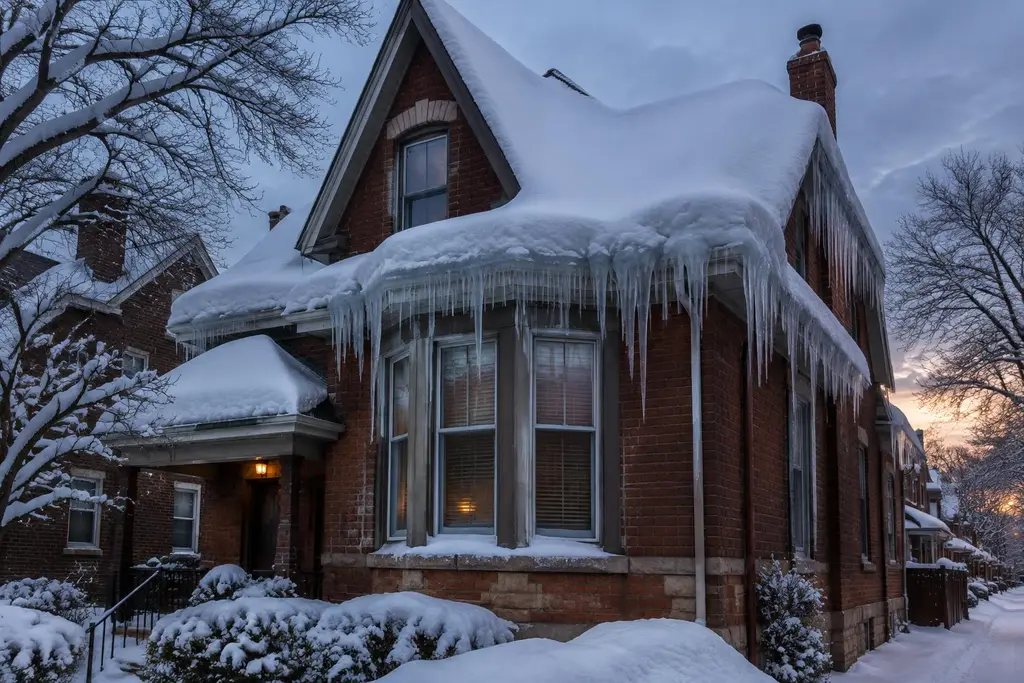
Toronto winters can combine snow cover with changing temperatures and repeated thawing. Heat escaping from the home may warm parts of the roof while the overhanging eaves remain colder. Meltwater moving down the slope can freeze at that edge. Sun exposure and roof geometry can also influence melting patterns, so the causes should be assessed rather than reduced to a single explanation.
Older homes may have uneven insulation, air leakage around ceiling penetrations or complicated attic spaces. Rear additions and roof intersections can create concentrated runoff and cold pockets. A clear eavestrough helps drainage, but cleaning it does not necessarily stop an ice dam caused by heat loss. The pattern of snow, ice and interior symptoms provides useful evidence when planning both immediate work and longer-term improvements.
Keeping clear of winter roof hazards
Ice hanging above an entrance or walkway can fall without warning. Keep people away from affected areas and avoid parking beneath obvious accumulations. Do not climb onto an icy roof, lean a ladder against an unstable eavestrough or stand directly below someone disturbing snow. Roof edges can be difficult to identify beneath snow, and hidden skylights or weak areas add further risk.
Inside the home, watch for new stains, dripping and sagging finishes. Water near electrical fixtures or visibly unstable ceilings needs appropriate assistance. Record symptoms from a safe location and note the weather conditions. If there is immediate danger to people, contact emergency services. Removing ice is not the first step when the work area or the building itself presents a more serious hazard.
Steam removal compared with forceful chipping
Controlled steam equipment can be used to melt ice with less impact than striking it with tools. Suitability depends on the roof material, access, equipment and conditions. Steam work still requires care around penetrations, edges and runoff. It should not be confused with directing high-pressure water at the roof, which can damage materials or force water into vulnerable details.
Forceful chipping with hammers, picks or sharp tools can break shingles, puncture membranes and damage flashings or eavestroughs. Frozen roofing may be especially vulnerable to impact. We discuss the proposed removal method before work begins rather than assuming every accumulation should be broken away. The objective may be to establish a drainage path or remove a hazardous section, not to strip every trace of ice from the roof.
- Assess access and the roof covering before selecting a method.
- Avoid impact that can damage concealed roof layers.
- Control falling ice and meltwater around the work area.
Understanding what removal can and cannot do
Removing an obstruction may allow trapped water to drain, but it does not repair damage already caused or eliminate the conditions that created the ice. Some areas may remain inaccessible, and continued cold weather can bring renewed freezing. Temporary relief should therefore be described separately from roof repairs and attic improvements. No single visit can control later weather or hidden building conditions.
After removal, accessible roof edges and flashings can be reviewed for visible damage. Interior wetting may require separate assessment, drying or replacement of affected materials. A stained ceiling may remain marked even after water entry stops. If symptoms continue, the source needs further investigation rather than an assumption that more ice removal is the only answer. Condensation and other leaks can occur during the same period.
Air sealing, attic insulation and ventilation
Longer-term planning often starts with how indoor heat and moisture reach the attic. Gaps around access hatches, wiring, plumbing and other ceiling penetrations can allow warm air to escape. Insulation coverage and depth may vary, especially near eaves or older alterations. Addressing air leakage and insulation together is generally more useful than treating the exterior ice as an isolated roofing issue.
Ventilation also needs an intentional path, with suitable intake and exhaust arrangements for the roof assembly. Blocked soffits or disconnected ducts can complicate moisture conditions. Adding vents without reviewing the whole attic may not resolve the problem. Some homes have compact or unconventional roof assemblies that need more detailed advice. Electrical clearances, recessed fixtures and exhaust routing should be considered before insulation work changes the attic.
Ice and water shield and roof-edge details
Ice and water shield is a protective membrane installed beneath the visible roofing in designated vulnerable areas. Its role is different from insulation or ventilation: it provides an additional layer of resistance where water may reach beneath the covering. It does not stop snow from melting, prevent ice from forming or correct a poorly detailed roof edge.
Installation usually requires access beneath the roof covering and must be integrated with the assembly, flashings and eave details. Re-roofing can provide an opportunity to review these connections. Eavestrough condition, downspout discharge and roof-to-wall transitions also deserve attention where runoff concentrates. If proposed repairs include structural or other regulated changes, permit requirements should be reviewed before that additional work is included in the project.
Planning the work and watching future winters
Our process is inspection, written quote, written contract, work, clean-up and walkthrough. The scope should distinguish ice removal, temporary protection, roof repairs and any separately proposed attic work. Site conditions and weather determine whether access is practical, so availability and sequencing need discussion without assumptions about immediate attendance. The work area may need temporary restrictions to protect neighbours, occupants and pedestrians.
Keep photographs of recurring ice patterns taken from safe ground-level positions. Note which slopes are affected and whether symptoms follow snowfall, a thaw or very cold weather. Comparing those records with attic findings can guide improvements. After work, continue to observe drainage and interior moisture rather than assuming one change addresses every cause. Do not return to unsafe roof access simply to check whether ice has reformed.